Showing posts with label first amendment. Show all posts

Thursday, December 2, 2010

A Constitutionalist's Perspective on WikiLeaks

By now chances are that you have heard about the latest WikiLeaks release and have either formed an opinion or sought out the opinions of others. Originally, it was my intention to keep my mouth shut regarding the issue because there are plenty of folks out there giving their opinions and demanding you agree with them. Some have offered balanced assessments, while most--I feel--have spouted ridiculous untruths, based on misguided ideological or partisan bias.

(It is not my intention to get into the nuts and bolts of the released WikiLeaks content in this post. For a good overview I recommend this article. It gives a sample of the content and the situation surrounding it.)

To properly inform one's perspective on the issue, one mustn't be taken in with the alarmism being thrown around. Likewise, one must separate the judgment involved in the releasing of the leaks from the legality of the actions. 

The absurdity coming from many opponents rests on a major misunderstanding--one where personal feelings have clouded proper criticism. Many have called into question the wisdom in releasing documents that could harm US-foreign relations. Such questioning is fine, and I believe sensible people can find themselves on both sides of the fence. Some can find the actions of WikiLeaks to be foolish; others can find them harmless or even heroic. I am not asking anyone to fall into either camp. I am just asking for people not to buy into foolishness.

Congressman Peter King is one of the most vocal peddlers of such foolishness. His blatant disregard for reality and the First Amendment is alarming. King's call for WikiLeaks to be classified as a terrorist organization and statement that the releasing of the WikiLeaks files is "worse than a military attack" proves he is a bit off his rocker, operating in a different world that ignores reality and constitutional freedoms. Anyone who has seen the content of the leaks can easily recognize the treat is one of political embarrassment, not military logistics. Moreover, even Secretary of Defense Gates has admitted that the last WikiLeaks release--which actually did pertain to current military action--yielded no casualties or lasting military failures, contrary to the dooming prophecies of neocons, alarmists, and warmongers alike, who made such claims.


Globalists, administration officials, and neocons may very well have reason to be alarmed at the latest round of WikiLeaks releases, but the chances that our men and women in the military have reason to worry over the works is slim to none. Their only worry should stem from leadership in both parties being ever willing to put and keep them in harm's way.

Clearly, if we are to value freedom, we must not compromise it even when the situation proves difficult. We must protect the freedom of speech and press at all costs, especially when doing so is unpopular. This does not mean, however, that we must agree with the content of that speech or press or even the decision of those producing the content to produce it.

What is being lost in the public discourse is that the wisdom of the leaks can be questioned while upholding the right for the information to be made public. We need not demonize to show disapproval. Calling the releases foolish is one thing, calling it terrorism is quite another. That is where many of the critics fail. Instead of merely disagreeing with the decision for the information to be released and offering their reasons why, many critics demonize WikiLeaks and create unfounded claims against the release of said information.

Whether you agree or disagree with the decision of WikiLeaks to release the information; there is no right to call their actions terrorism. Once again: calling something unwise or reckless is one thing; claiming terrorism and calling for a suspension of constitutional rights is quite another.

Over the past week I have seen utter hysteria over these new leaks. Looking at them objectively, I laugh at how bent out of shape some are getting over the incident--especially considering how tame the leaks are compared to the last batch. What I find most alarming is how quickly people are willing to label the action of WikiLeaks "terrorism" and completely throw the Constitution out when considering the matter. Moreover, the true colors of many pundits and politicians is being well displayed. We see how globalist many are in their concerns, how deep neoconservatism has imbeded itself into modern political thought, and how much of a battle those of us who desire a humble and constitutional foreign policy still have to fight.

When considering the WikiLeaks issue I was reminded of my hero Thomas Jefferson's words to Charles Yancey where he wrote, "The functionaries of every government have propensities to command at will the liberty and property of their constituents. There is no safe deposit for these but with the people themselves, nor can they be safe with them without information. Where the press is free, and every man able to read, all is safe."

I think we know where Mr. Jefferson would have sided on the issue.

I leave you with the words of Ron Holland, which echo my own sentiments:
I join with real conservatives not the false neocon war advocates hoping these leaks do not threaten our troops or necessary intelligence operatives. Still Americans must understand it is Washington and economic interests that have actually placed our troops at risks in foreign military wars and occupations not in the real interests of the United States, the nations invaded or civilians killed.

Tuesday, April 20, 2010

A Victory for Free Expression...Court Upholds Unpopular Expression

The Washington Post  reports on the latest victory for free expression:
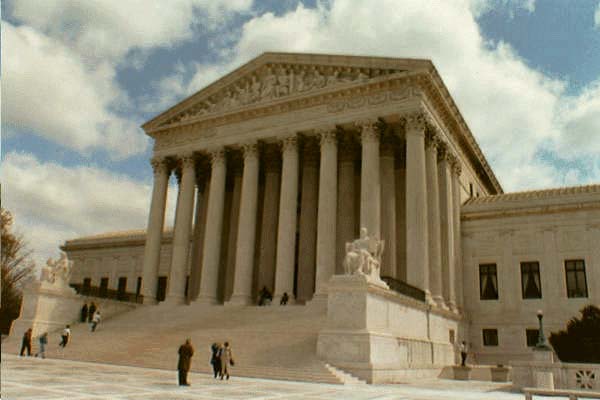
The Supreme Court struck down a federal law Tuesday aimed at banning videos depicting graphic violence against animals, saying that it violates the constitutional right to free speech.

Chief Justice John J. Roberts Jr., writing for an eight-member majority, said the law was overly broad and not allowed by the First Amendment. He rejected the government's argument that whether certain categories of speech deserve constitutional protection depends on balancing the value of the speech against its societal costs. 
"The First Amendment's guarantee of free speech does not extend only to categories of speech that survive an ad hoc balancing of relative social costs and benefits," Roberts wrote. "The First Amendment itself reflects a judgment by the American people that the benefits of its restrictions on the Government outweigh the costs. Our Constitution forecloses any attempt to revise that judgment simply on the basis that some speech is not worth it." 
The law was passed in 1999 in an attempt to prevent the sale of "crush films"--fetish films in which animals are crushed. The law, however, is so overly broad that it could be used against hunting videos and mere depictions of violence toward animals.

Writing for the Court, the Chief Jusice noted that as written the law “creates a criminal prohibition of alarming breadth.”  The SCOTUS blog reported, "Noting that the government had given assurances that it would enforce the law only against commercial portrayals of “extreme cruelty,” the Chief Justice wrote that the Court would not uphold an unconstitutional law “merely because the government promises to use it responsibly.”"

The Cheif Justice is right to call into question reliance on responsible usage of the law. Any chance for abuse must be nipped in the bud when its knowledge arises. 

It should be noted that the Court's ruling was not against the ability of the federal government to legislate against animal cruelty. Rather, the ability to ban videos depicting such was called into question. The Court thankfully took the right stand refusing to further gut First Amendment protection.

It has long been noted that the First Amendment is not needed to protect popular expression. Rather, it is the unpopular which warrants protection. Indeed, those of us who value liberty are oft in need of the First Amendment's protection.

I find animal cruelty despicable, but so is the violation of First Amendment protection. If states want to enact laws against cruelty to animals, that is their prerogative. But banning a form of expression is outside the pale of acceptability. If we are to maintain a free society, let us fix these problems by changing the culture, not by changing the law.

In his magnum opus On Liberty, John Stuart Mill wrote, "Strange it is that men should admit the validity of the arguments for free speech but object to their being "pushed to an extreme", not seeing that unless the reasons are good for an extreme case, they are not good for any case." Write he was then, and so he is today. 

Monday, April 19, 2010

Federal Court Shows Establishment Clause Ignorance


On Thursday a federal judge in Wisconsin  ruled the National Day of Prayer unconstitutional, claiming it to be a call for religious action that violates our nation's supreme law. Needless to say, U.S. District Judge Barbara Crabb could not be farther off the mark in her ruling.

According the the Associated Press, Judge Crabb "wrote that the government can no more enact laws supporting a day of prayer than it can encourage citizens to fast during Ramadan, attend a synagogue or practice magic."

Actually, the government could do all of those things and still fall within the pale of the Constitution. Regretfully, the judge's ignorance of the Constitution's meaning is glaring. The First Amendment to the US Constitution merely forbids laws respecting the establishment of religion--an understandable concern for a nation founded as a refuge for religious liberty. Anything that falls short of an establishment of a national church/religion is not the least bit unconstitutional. Of course, the Court has over the years attempted to set up arbitrary barriers around Church-State interactions, but whether or not these barriers are good policy is beside the point. It is constitutionality, not the effects of policy, which should be the Court's concern.

I think it is personally bad policy for the event to happen, but that does not mean I can call such unconstitutional. I believe the National Day of Prayer is a superficial act which does nothing to further the Gospel or health of the Christian faith. To me it is an event that has turned into one big DC charade, therefore, I could care less if it was done away with. But, when it faces cancellation based on false rulings by a federal court, I will be quick to call foul.

Whether or not one agrees with prayer in a political setting is of no concern in the matter. The simple question is "What does the Constitution mean, and is this particular act a violation of such?" If properly approached, a ruling contrary to the Wisconsin court should be the result.

I hold to the classical evangelical position that goes beyond a forbidding of establishment and calls for a lack of mingling the business of church and state, believing that such causes harm to both and a compromise to the Gospel. But even if I think something is in poor taste, I would never be as foolish as to call such unconstitutional.The court system would be wise to follow suit.

Almost as bad as the misguided ruling of the court is the cry of many conservatives.
The American Center for Law and Justice, which represented 31 members of Congress who joined the federal government as defendants, called Crabb's ruling flawed and promised to appeal.

"It is unfortunate that this court failed to understand that a day set aside for prayer for the country represents a time-honored tradition that embraces the First Amendment, not violates it," ACLJ Chief Counsel Jay Sekulow said in a statement.

The Alliance Defense Fund, an Arizona-based group of Christian lawyers, issued a statement saying Crabb's ruling undermines American tradition dating back to the nation's birth.
Completely missing the mark, these opponents of the ruling point to tradition for support. Tradition is not the final word; the Constitution is. The document's actual meaning should be their source of strength.

What we see in this case is failure on both sides to respect the Constitution. The court appeals to a need for a "significant secular purpose" to constitute prayer. (What could that even be?!?!) And the defendants point to tradition. I would merely like to see the document given the final say; apparently that is too much to ask.

PS: In case you were wondering, the Obama administration is not backing down and intends to go ahead with the National Day of Prayer.